

Love that Hurts: Why Victims of Intimate-partner Violence in Cameroon Remain Silent
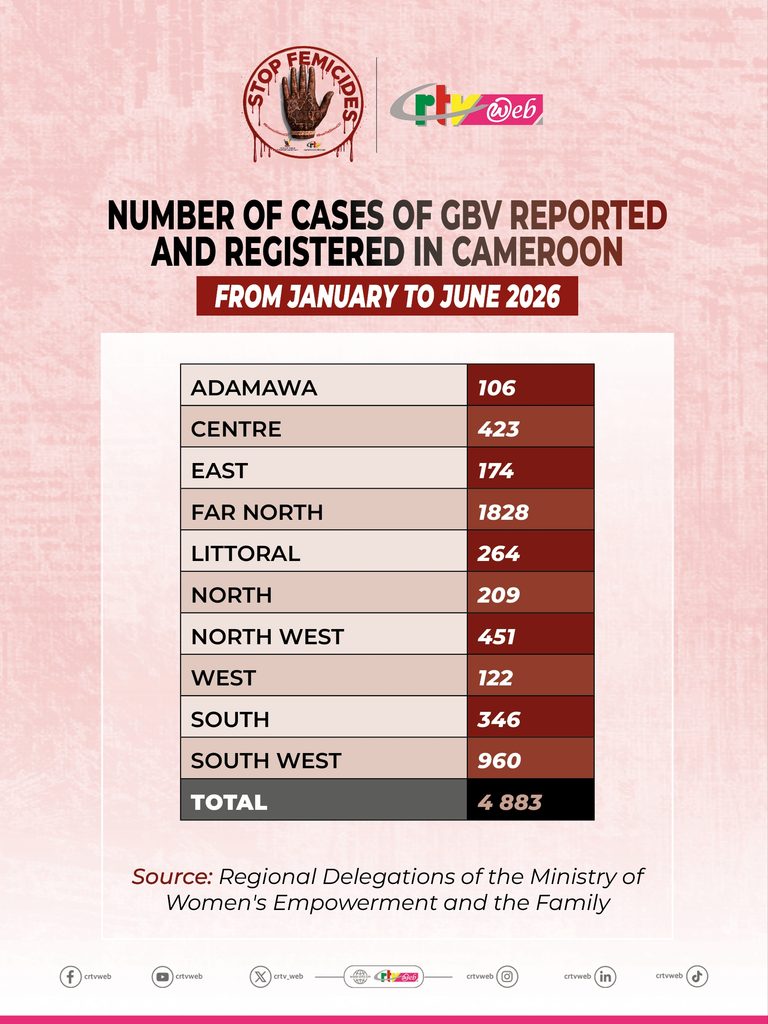
Between January and June 2026, about 4883 cases of Gender-based Violence (GBV) were reported in Cameroon, according to statistics from the Ministry of Women’s Empowerment and the Family (MINPROFF). This figure does not include the unreported cases. MINPROFF also carries alarming alarming data in femicide: over 73 cases reported between January and September 2026, giving […]
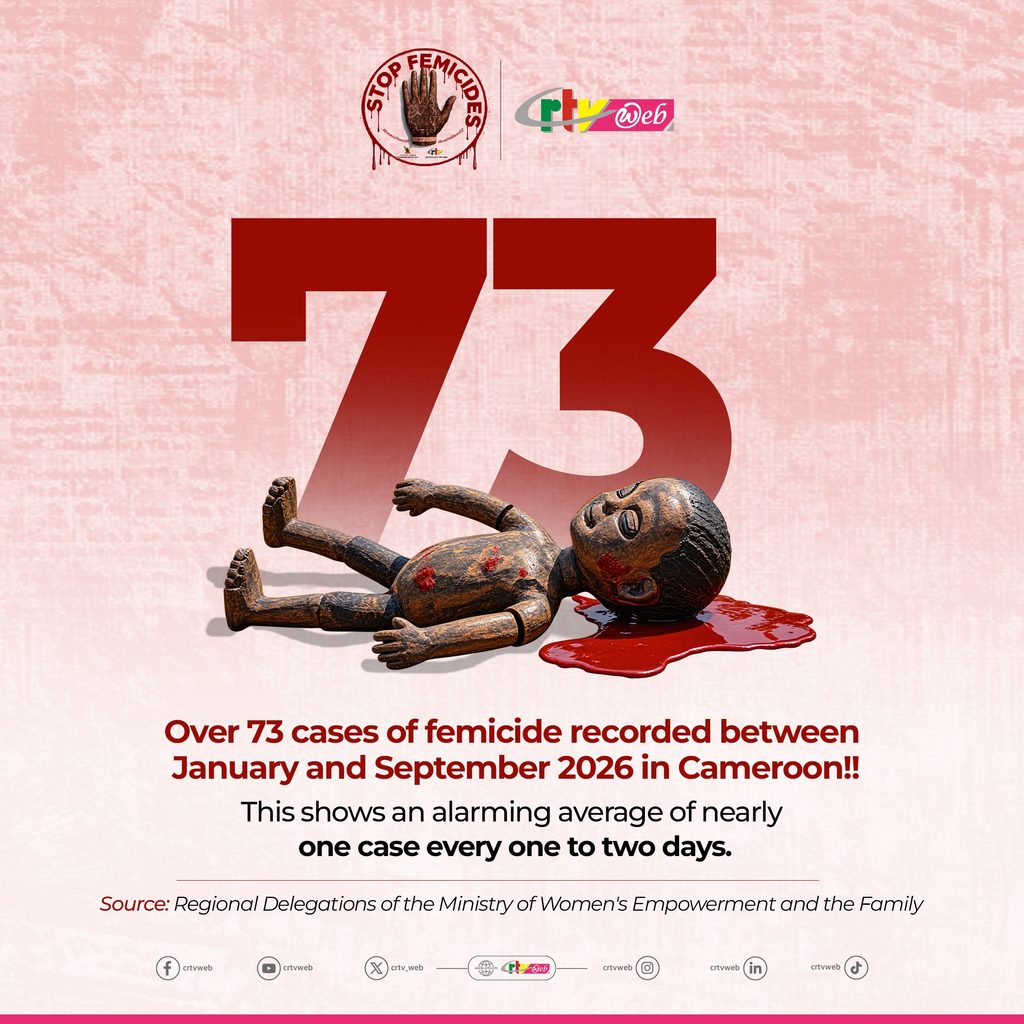
MINPROFF also carries alarming alarming data in femicide: over 73 cases reported between January and September 2026, giving an average of nearly one case every one to two days.
Unfortunately, most cases are reportedly being perpetrated by intimate partners (intimate-partner violence).These cases are quite a lot, yet some go unreported. In the meantime, some cases are reported but the victims do not leave the premises of their violent partners. Difficult to understand why they don’t report or leave…. Their reasons range from dependency on the violent partner, societal shame, and fear of the unknown, amongst others.
Intimate Partner Violence: The Fear of Speaking Out
A Medical Doctor who is also a Global Mental Health Specialist, Dr Joan Enjema Ashu, explains that people experiencing gender-based violence do not always disclose it easily, « Sometimes, even when the signs are visible, the person may deny what is happening or minimise its severity. »
« There is rarely one major fear, » she continues. « It can be a combination of fear for personal safety, fear for the children, financial insecurity, societal judgement, family pressure, emotional attachment, religious or cultural expectations, and uncertainty about what life will look like afterwards. »
A Psychosocial Counselor and Mental Health Specialist, Dr Joel Nzegong Gamnje, expatiates on the above reasons raised.
The specialist says her experience of working in the North West Region of Cameroon reveals that victims, especially women, face both cultural and conflict-related vulnerabilities.
She explains that some women who are experiencing violence from intimate partners do not report because of the fear of beatings, death threats, or more violence, should they speak out.
Dr Joan Enjema Ashu adds, « A survivor may be afraid that speaking up will make the violence worse. They may fear retaliation from their partner, losing their children, being blamed, or not being believed. »
The fear of people not believing the victim’s story or downplaying it is crucial. « So many of them tried to speak and were told it is a family matter so they should go home and settle it…so they don’t want to speak out anymore, » Dr Joel Nzegong explains.
« There is also the fear of stigma and shame. In our community, a woman who reports sexual violence or domestic abuse is often blamed. They are asked, “What did you do?” “Oh, you have disgraced the family.” So they prefer to be silent, » she adds.
Economic dependence is another aspect the Counsellor highlights, « Some victims fully depend on their husband, and they wouldn’t want to speak out for fear of the future… Where will I sleep? How will I cater for my children? »
This is the same fear some women incarnate when they say they « stayed because of the children », as Dr Joel Nzegong explains.
Our Systems Must Rise above Situation
There is also some lack of trust in support systems. « Some of the victims that have gone to report have met with corrupt or insensitive systems. There is the fear of the police asking for money, or their story being used as gossip in the neighborhood. So now there’s lack of trust, » the Psychosocial Counsellor frowns.
The Culture of Silence is Dominant
« Another aspect making victims silent is cultural and family pressure. The family, especially mothers, aunts, and some church leaders, often tell the victim, ‘For the sake of your children, stay…don’t bring shame to us…’ The victim therefore remains silent to protect the family name, » Dr Joel points out.
« A woman may hear, ‘Be patient,’ ‘Think about your children,’ or ‘What will people say?’ ” Dr Joan Enjema Ashu corroborates.
These messages can make some women remain silent even when they are suffering.
Intimate Partner Violence: From Hanging in for Society to Psychological Pressures
There are also psychological hindrances affecting victims’ willingness to report violence.Dr Joel Nzegong explains that some women are already too traumatized, leading to low self-esteem, depression, post-traumatic stress disorder, and self-blame. « A traumatized person feels powerless and thinks they don’t deserve help or nobody can help them.
« Dr Joan Ashu confirms the above assertion, « Over time, repeated abuse can also affect a person’s confidence, self-esteem and ability to believe that they can leave or build a life outside that relationship. »
She says, « We also need to understand the psychological dynamics of abuse. Abusive relationships are not necessarily violent every single day. There may be periods of violence followed by apologies, affection, promises to change and temporary calm. This can create hope that things will become better.
Ignorance of One’s Plight and Rights
The normalisation of violence as love or as normal discipline in marriage has also eaten up society like a cankerworm, making it difficult for victims of intimate-partner violence to report. « Some of them don’t even identify what they are experiencing as violence until when most of them are educated on what is happening, » Dr Joel Nzegong Gamnje explains.
Over all, there is a lack of information as some women in rural areas especially, do not know that GBV is a crime and that there are free and confidential services to report to. « They do not know that they have a right to psychosocial support, health care, and legal protection. Due to this ignorance, they keep on enduring and dying in pain. Things are however getting better with more counselling, » Dr Joel Nzegong Gamnje adds, on a positive note.
To the Man on the Road: Don’t be Passive… Help Victims
« When we ask, ‘Why doesn’t she just leave?’ we may be asking the wrong question. A better question is: “What is making it difficult or unsafe for this person to leave, and what support does she need?” Dr Joan Enjema Ashu underlines.
In her opinion, our response to GBV must go beyond telling survivors to leave, « We need safe and confidential healthcare services, psychological support, social and legal protection, economic empowerment, trusted support systems and appropriate referral pathways, » she argues.
She continues, « Most importantly, when someone finally speaks about abuse, our first response matters. We should listen without judgement, take their concerns seriously, assess immediate safety needs, and help them access appropriate support. »
In her opinion, silence does not necessarily mean that everything is fine. « Sometimes silence is a reflection of how unsafe a person feels to speak, » she notes.
Intimate-partner Violence: From a Victim’s Perspective
« I am still with my husband because he is not always violent. The violence comes in when we argue about something but on other days, we are okay together, though I try to avoid talking much which may in turn upset him, » explains Lindsay O. (fictitious name), a mother of four, who is a victim of Gender-based violence. Her reason for hanging in is the existence of episodes of non-violence in her home.
Akrya Z. (fictitious name) who left her violent husband after over five years of marriage, initially stayed in the marriage because she believed that things would get better. »I got into a marriage with a partner who had lost his job…. Maybe I would have considered this as a red flag, but his family made me feel like if I let go, it meant I was materialistic, » she recounts.
She explains how she confided in elderly people and they told her that her husband is violent because he is frustrated about being unable to take care of his family. « I stayed and supported him the way I could and did my best as a wife but realized that, once he got back on his feet and had the stability he wanted, I still had to go through a lot. The violent scenes hadn’t ceased, » she recounts, broken.
She continues, « With all that and me almost losing my life, I decided to leave. »
Intimate Partner Violence: Leave Before Life Leaves You
While society may pressure those experiencing intimate-partner violence especially women to be patient and hope for a change, those who have survived and moved on advise their peers to seek happiness. »Do what makes you happy. At the end of the day, you have to live… you have to survive for your kids.You don’t have to fear what people will say. You have not failed. You are trying to survive. So if surviving means leaving, you should leave! » Akrya Z advises.
To her, if the victim has tried to adjust the relationship but it has instead reached the extent where the woman is injured and the kids are affected emotionally, « Why would she still believe that she can survive? »
« Some of the victims stay because they think if they go, no one is going to take care of them with kids… no other man is going to accept them. You should not leave then start thinking of who will take you in next. You should leave for your safety, for your sanity, for the children you have, » Akrya Z continues.
To her, leaving means you’ve accepted your fate and you are affirming that you have to stand up for your kids.
« You have to work and survive for the children. « If you die now, who is going to take care of them? Life is very short. You have to live it to the fullest. Note, marriage isn’t meant to be; Marriage is a blessing you have to enjoy.The blessing is not supposed to come and add sorrow to it, » Akrya Z concludes.
Help Does Exist!
In spite of the fear to speak out or leave violent relationships, the Government of Cameroon and the civil society have various help mechanisms set up for victims of GBV.
Journalist and Gender Activist, Comfort Musa, expatiates on this, « As activists and as journalists, our role is to reassure them that speaking up is not stepping into danger but into protection. »
« There are mechanisms: social, medical, legal, and community, designed to protect survivors. Our collective responsibility is to make sure these systems work in practice, so that silence is no longer seen as the safer option, » she continues.
The Gender Activist explains that amongst mechanisms put in place by Government are the National Strategy on Gender‑Based Violence, referral systems through the Ministry of Women’s Empowerment and the Family, and legal aid via the Cameroon Bar Association.
« Different civil society organisations complement these with safe spaces, psychological support, and legal assistance through groups like ACAFEJ and Plan International, » she adds.
What if Medics Join the Fight to Make Victims Speak Out?
Victims of GBV who go to the hospital but do not declare what happened to them could still be identified and helped if they are willing to open up.
An Expert Witness in Legal Medicine, Dr. Pearl Oben A. explains that victims of GBV will usually consult several times in a week.
« It is important for us to recognize this as indirect signs of people who are experiencing gender-based violence. The victims don’t feel comfortable talking about what their partner is doing to them so they tend more to bring up the indirect signs. That means sometimes the person points to the knee, whereas the pain is on the hand. You will need to look beyond what the person is saying with their mouth, and be very observant, » she emphasises.
« We might have victims who visit the hospital frequently, usually in the state of emergency. We can also have others who just come with imprecise complaints. Today they could say their leg, the next day their tummy, the next day their head. Just quite imprecise complaints or chronic pains. They keep complaining about a particular pain. Nothing is wrong with the tummy, but after probing a little, one might realize that they come to the hospital in order to escape a fight, more torture, or after some harm has been caused to them, and they are just finding a place where they can express themselves, » the Medical Doctor explains.
She continues, « We can also have accidents with patterned kinds of injuries. You would see marks in protected sites that normally are not really exposed even when there is an accident. You might notice marks on the abdomen, which is usually covered with clothes. You may see marks on the breast, the inner arms or the inner thighs, or even just on the thigh itself, areas that you usually expect to be covered. Sometimes these marks might have a pattern. You might notice a handprint, or bites, or a scratch. You might as well see signs of strangulation. »
The medic reveals that they might also come in the context of unplanned pregnancies or frequent unplanned pregnancies, frequent STIs, and unexplained miscarriages.
« All of these can be in the context of violence, where there is limited financial power, or there is much control over the woman, so she tends to have these STIs frequently because she can’t stand for her sexual rights to protect herself as she wants, and also in the context of fights, the features could be affected, and then you have these unexplained miscarriages, » Dr Pearl Oben A. indicates.
She also mentions that even when doing imaging like X-rays and ultrasounds, there are other things that can be noticed which can orient the clinician or the healthcare professional to the possibility that this might be a case of violence.
The Medicolegal Expert also points to what can be observed by families at home, where someone gets too reserved or develops the tendency for self-harm.
The health expert adds that what people write online could reveal signs of the desire to self-harm.
To her, iIt is the place of the clinician to help the victims know that the violence is not their fault.
She however cautions Medics who identify victims of intimate-partner violence or other forms of GBV to handle the consultation with tact « When someone presents himself or herself at a health facility, we have to ensure that they are in a safe space before any consultation or personal questions come in. Ensure that they are in a safe space where they can talk freely. You might need to tell their partner to move out. You might even notice a red flag when the partner wants to answer the questions on behalf of the other partner. They want to just say « Yes. I know. This is what happened. This is why this person is coming to consult. » You need to watch out for this as well, and be fast enough to try to talk with the patient alone, or possibly in the presence of another hospital staff. This is needed, especially when you feel that the the patient doesn’t feel safe. »
She recommends that medics learn to listen not just with their ears but also with their eyes. « Be very observant, and I’m sure that we’ll be able to bring so much help to victims all around us, such that they survive and even get better to the level of being able to leave those abusive homes, make the right decisions for themselves, and help others that are going through abuse. »
The Doctor reiterates, « There is no excuse for anyone to be abusive. There is no one that merits abuse, so no reason is ever good enough because victims usually feel like it’s their fault. »
With all these, it is the desire of every a Cameroonian that the episodes of femicide, intimate-partner violence and Gender-based Violence come to an end in Cameroon, with victims seeking help and perpetrators facing the law, accordingly.
Eleanor Ayuketah Ngochi