
Cameroon Launches 4th Population, Housing and Agriculture Census
Cameroon has launched a nationwide census aimed at updating key data for development planning, with citizens called upon to participate fully. The operation, combining the Fourth General Population and Housing Census (#GPHC) with the General Census of Agriculture and Livestock (#GCAL), is taking place from April 24 to May 29, 2026 across the national territory. […]
The operation, combining the Fourth General Population and Housing Census (#GPHC) with the General Census of Agriculture and Livestock (#GCAL), is taking place from April 24 to May 29, 2026 across the national territory.
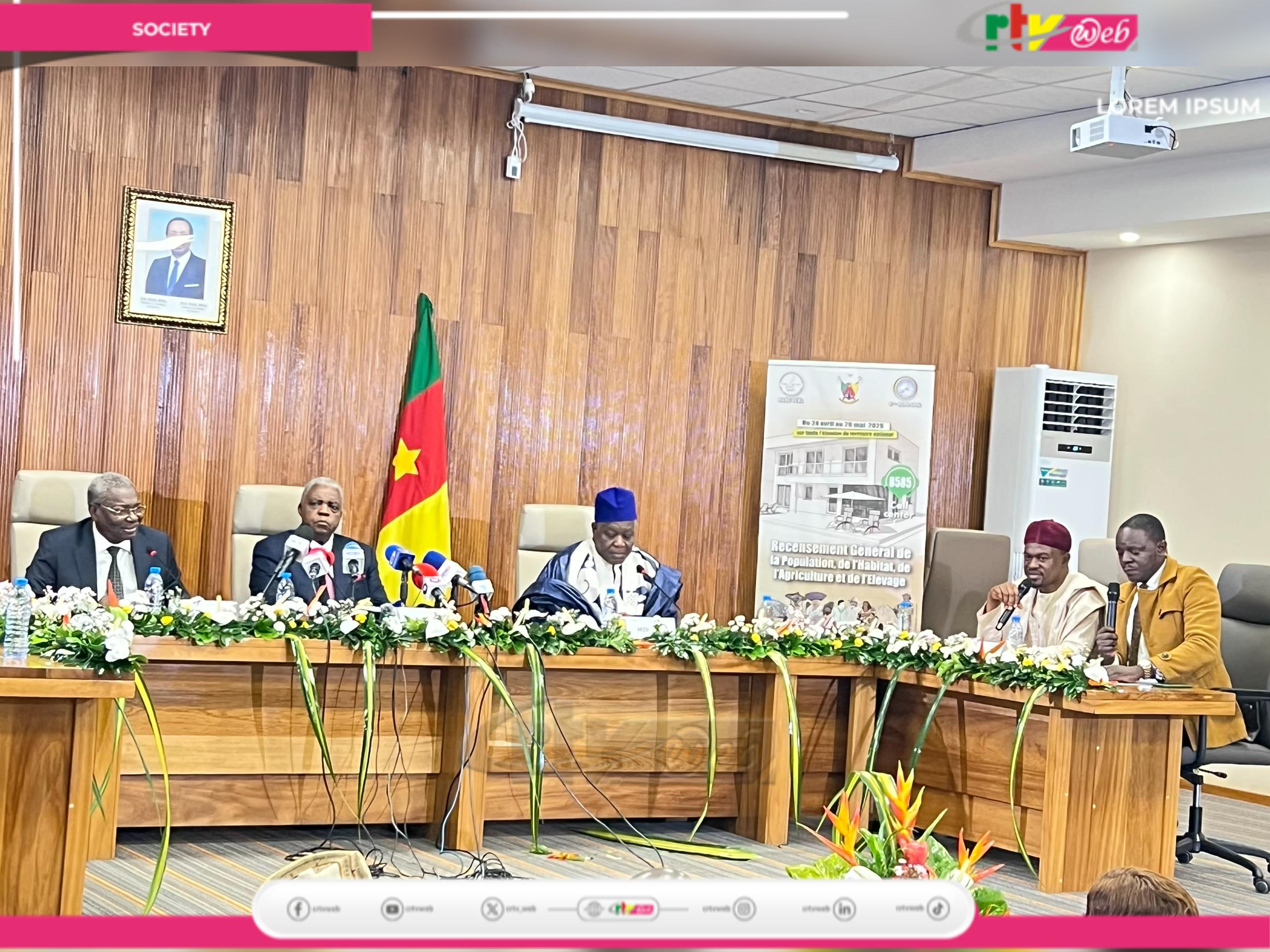
At a press conference in #Yaoundé on Wednesday, April 29, 2026, the Minister of Communication and Government Spokesperson, René Emmanuel Sadi, alongside the Minister of Agriculture and Rural Development, Gabriel Mbairobe, and the Minister of Livestock, Fisheries and Animal Industries, Dr. Taïga, outlined the objectives and expectations of the census.
A major highlight is the activation of the official call centre number, 8585, which is available to the public for information, assistance, and verification throughout the census period.
A Tool for Planning and Development
Speaking during the press conference, Minister René Emmanuel Sadi said the combined census will provide an updated demographic, agricultural and livestock data to guide public policy, economic planning and infrastructural development.
He noted that the operation will serve as a governance tool to support the implementation of Cameroon’s National Development Strategy (#NDS30) and the Sustainable Development Goals (#SDGs).
Since independence in 1960, Cameroon has conducted three population and housing censuses : 1976, 1987 and 2005 with the last agriculture and livestock census dating back several decades.
The current exercise is therefore expected to fill existing data gaps and reflect present-day realities.
Scope of Data Collection
Information from the census documentation shows that the exercise will cover data on individuals and households, including place and date of birth, nationality, residence, level of education, professional qualifications, employment status, marital status and languages spoken, as well as involvement in agricultural, livestock and fishing activities.
The Minister of Agriculture and Rural Development speaking at the press conference, said the data will provide insights into production systems, access to agricultural inputs and services, land use, crop yields and equipment.
Dr. Taïga, for his part, noted that the livestock component will generate information on farming systems, infrastructure, stakeholders and the use of digital services in the sector.
Public Mobilisation and Data Protection
Figures presented by the Minister of Communication from pilot tests conducted between October and November 2025 show a 99.46 percent participation rate, reflecting strong public support.
He indicated that traditional rulers, religious leaders and farmer organisations have been mobilised to support awareness efforts, alongside a nationwide media campaign.
The population is urged to welcome census officers, who are identifiable by badges and vests with the inscription “4th RGPH/RGAE”.
Census documentation further states that all information collected is strictly confidential and protected under the 2020 law on statistical confidentiality, with no personal identifiers retained in processed data.
Faster Results Through Digital Data Collection
Officials of the Ministry of Economy, Planning and Regional Development during the press conference say the results of the census are expected in about five months after the end of data collection significantly earlier than in previous exercises. This is made possible by the use of digital tools, notably smartphones, which streamline data collection and processing and reduce delays associated with manual handling.
As the operation unfolds nationwide, authorities are counting on the cooperation of all residents to ensure reliable data is gathered, making the exercise a shared responsibility and a key step toward Cameroon’s development objectives.
Egoh Yvonne (Intern)